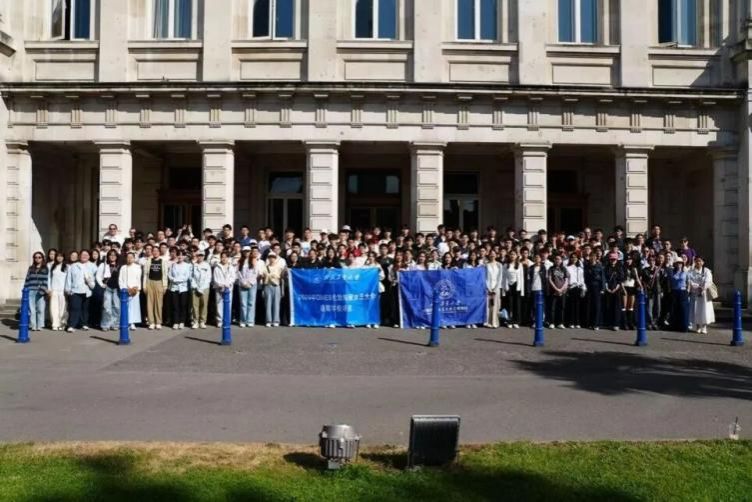
To further broaden students’ international horizons and enhance their global competence and intercultural communication skills, QMES organised a two-week Summer School at Queen Mary University of London (QMUL) in the UK from 19 July to 2 August, with 137 students taking part. Building on the School’s distinctive strengths in Chinese-foreign cooperative education, the programme integrated engineering practical training, cultural experiences and teamwork, enabling students to strengthen their academic foundations through hands-on practice, broaden their international perspectives through intercultural engagement, and develop their overall capabilities through collaborative activities.
Breaking the Ice | An Engaging Campus Exploration
The Summer School officially commenced on the morning of 20 July. Professor James Busfield, Deputy Head of the School of Engineering and Materials Science at QMUL, delivered a welcome address. Li Wang, Eleonora and Babatunde introduced the programme schedule, laboratory safety requirements, and practical guidance on study and daily life, laying a solid foundation for the smooth and orderly delivery of the programme. Students then took part in a campus exploration challenge, familiarising themselves with the university environment through engaging activities and strengthening team cohesion.
Hands-on Exploration | From Rigorous Experimentation to Creative Making
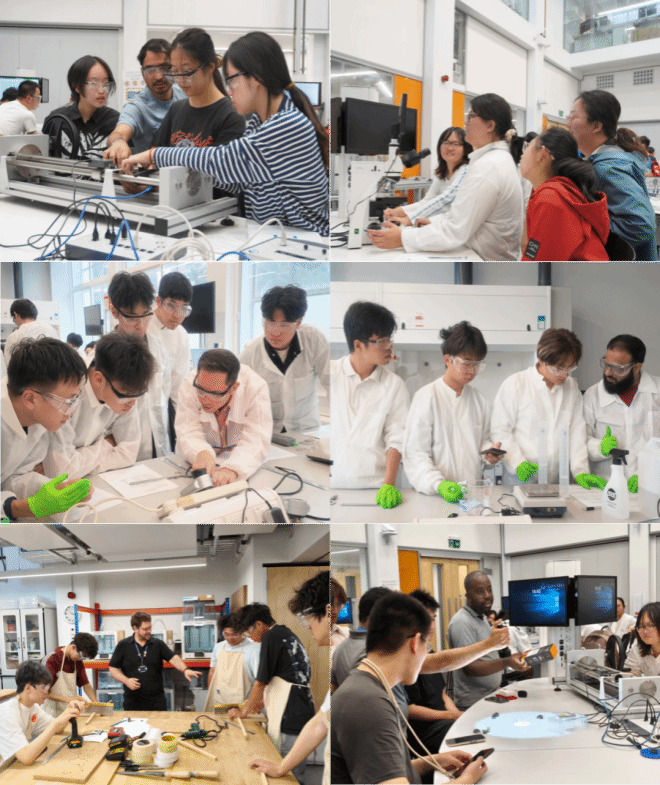
The Summer School featured a series of practical engineering sessions centred on core principles of materials science, mechanics and related fields, encouraging students to explore the distinctive appeal of engineering through hands-on experimentation and creative making. In class, students carried out practical activities including tensile testing of materials, microscopic examination of material structures, viscosity measurements and thermal conductivity experiments to investigate and verify relevant engineering principles. At the Maker Space, they independently designed and built wooden land yachts. They also visited a haptics laboratory and a dental hospital, gaining first-hand exposure to cutting-edge applications of biomaterials and medical engineering. From carefully controlled scientific experiments to creative work in the Maker Space, the programme helped students consolidate their professional foundations through hands-on practice, stimulate innovative thinking through collaboration, and strengthen their practical skills, creative thinking and teamwork capabilities.
Alumni Insights | Learning from Experience and Shaping Future Goals
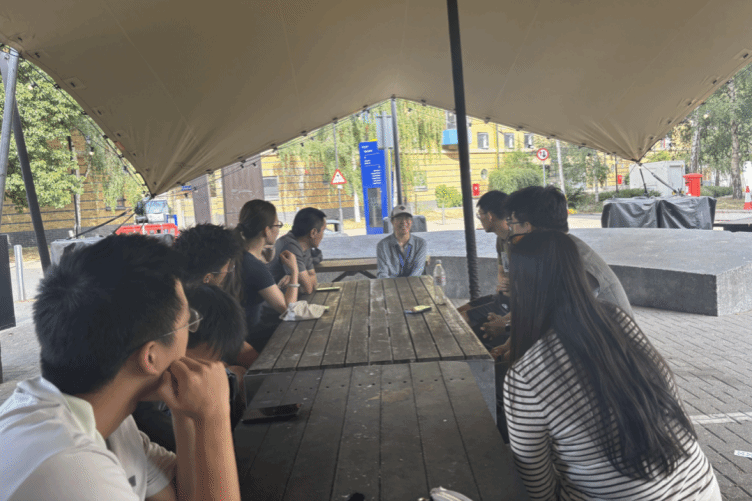
QMES invited four alumni currently studying at the University of Cambridge, Imperial College London, University College London and QMUL to meet with students for a discussion. Drawing on their own experiences, the alumni shared insights into choosing postgraduate institutions, preparing and refining application materials, managing research commitments and adapting to life overseas. The students drew valuable lessons from their experiences anddeveloped clearer ideas and plans for their future career development.
Cultural Experience | Exploring Diverse Perspectives and Supporting Holistic Development
To enrich their intercultural learning experience, students engaged in a range of activities, including field research, on-site discussions and visual documentation, exploring the local cultural heritage,artistic aestheticsand approaches to science and innovation. Moving beyond the classroom, they gained first-hand insights into diverse cultures. Immersed in these intercultural experiences, students broadened their international outlook and enhanced their ability to engage with and reflect on different cultural contexts, making the programme a meaningful and enriching experience in intercultural learning and personal development.
Programme Highlights | Reflecting on Achievements and Looking Ahead
At the closing ceremony, Wiebke Leugers from the Global Partnerships and Opportunities Office provided a comprehensive overview of the key considerations for applying for postgraduate study at QMUL, helping students gain a clearer understanding of potential pathways to further study. Sir Harry Bhadeshia delivered a specialist lecture on materials science, highlighting its importance and practical applications in disaster risk reduction and societal safety and security. Professor Liz Tanner, Fellow of the Royal Academy of Engineering, encouraged the students to stay true to their aspirations, pursue their goals with determination and have the confidence to forge their own paths.
Towards the end of the ceremony, students and staff looked back on the two-week programme. Based on the students’ overall performance throughout the programme, a number of awards were presented, including Best Overall Task Group, Best Creative Group, Best Creative Photograph and Best Video Editing. Professor Liz Tanner then presented certificates of completion to all participants, bringing the Summer School to a successful close.
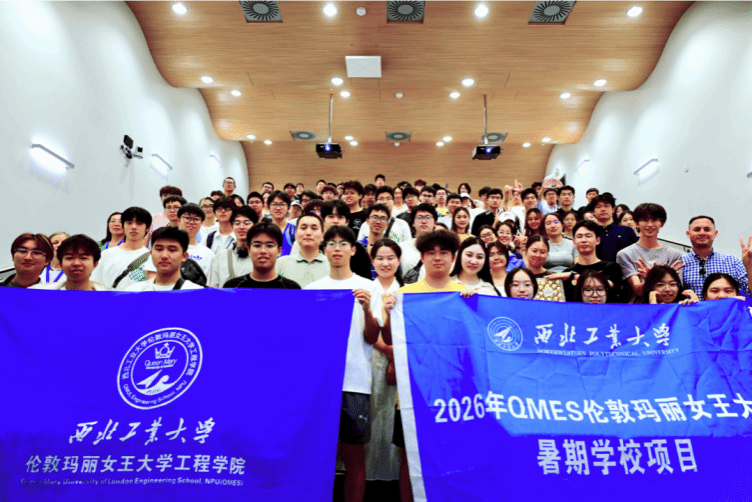
The Summer School provided not only an intensive opportunity for students to strengthen their professional capabilities but also an important example of the two institutions’ longstanding collaboration in cultivating internationally oriented engineering talent. Students consolidated their academic foundations through immersive learning experiences, developed innovative thinking through laboratory sessions and creative workshops, and gained first-hand experience of diverse cultures through city exploration and teamwork. Looking ahead, QMES will continue to expand high-quality international exchange opportunities, supporting students in developing a strong academic foundation and a broad global outlook, fostering a deep sense of commitment to their nation andforging outstanding global competence. Through these efforts, QMES aims to help students become innovative engineers who are rooted in their home country, equipped with a global outlook and prepared to shape the future.
Reflection from Students
YuxuanWang, an undergraduate student from the 2024 cohort, QMES:
“The Summer School offered a wide range of practical sessions, and themechanical testing experimentleft the strongest impression on me. We operated a universal testing machine ourselves to carry out tensile tests on materials and witnessed first-hand how a steel rod fractured and deformed under load. The dull sound of the fracture and the visible deformation of the material gave me a much more tangible understanding of what ‘material failure’ means in an engineering context. Concepts that had seemed abstract in textbooks came to life through hands-on experimentation and direct observation, helping me bridge the gap between theoretical knowledge and practical understanding.”
SiyuanLi, an undergraduate student from the 2024 cohort, QMES:
“The group research challenge was the most memorable practical experience of the Summer School for me. During the activity, my team worked together to conduct field research around the city, completing the entire task on foot. We divided responsibilities, developed an action plan, actively communicated with people to gather information, and documented and organised our findings along the way. This immersive and collaborative research task was challenging, but it also helped me grow through teamwork and first-hand field research.”
RuoxiXiao, an undergraduate student from the 2025 cohort, QMES:
“The two-week Summer School was a rewarding and enriching experience. Throughout the programme, my teammates and I spent time in the laboratory, adjusting equipment, calibrating parameters and recording data through discussion and collaboration. We listened attentively to our lecturers’ expert explanations and guidance, strengthening our professional foundations through hands-on practice. In our free time, we walked along the River Thames and immersed ourselves in the city’s diverse cultural atmosphere. Through learning, I gained new knowledge; through exploration, I gained a broader view of the world. This unique experience has been immensely rewarding and will remain a lasting memory.”
Text:QuGe,JinmingWang,ChunyiZhao,CaihanWang,QichenQiao, andJingxinCui
Photos: Programme participants
Translator:JieFang
Reviewers:FenpingYang,YinCheng andDanXiang