To encourage young students to learn, develop their capabilities,and contribute through practical engagement with China’s green transition and efforts to build a Beautiful China, the “Exploring Marine Industries, Advancing Materials Innovation” social practice team from QMES, led by Lv Yan and Ge Qu, travelled to Qingdao and Rizhao in Shandong Province and Ningbo and Zhoushan in Zhejiang Province to undertake the “Youth in Action” themed summer social practice programme from 12 to 21 August.
Exploring Marine Resource Development and Green, Smart Ports
The team travelled to Qingdao and Rizhao to conduct field research and practical activities. Focusing on marine resource development and the green transformation of marine industries, the team visited marine pharmaceutical research platforms and marine technology enterprises, gaining a systematic understanding of technologies forresearching, developing, and applyingmarine bioresources for pharmaceutical use. The team also conducted an in-depth study of key processes involved in seawater desalination, gaining a deeper understanding of its practical significance for safeguarding water security and supporting sustainable economic and social development.
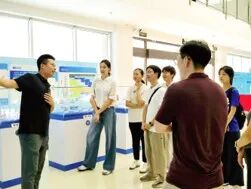
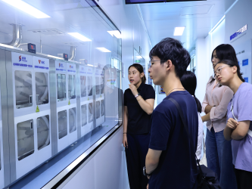
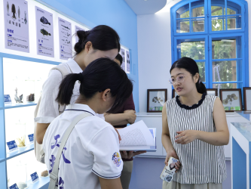
During the programme, the team joined the “Pursuing Maritime Aspirations, Rising to Challenges” social practice team from the School of Marxism at Ocean University of China in a visit to the Rizhao Port Exhibition Centre. They learned about the port’s development, modern logistics system,anditsprogress in developing a smart port.
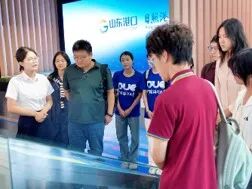
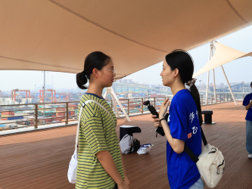
Students from the two universities also held discussions on green port development. By bringing together perspectives from engineering, the humanities and the social sciences, they deepened their understanding of green development and strengthened their sense of responsibility as youth in the new era.
Investigating New Materials Innovation and AI-Enabled R&D
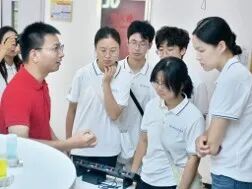
The team visitedseveralresearch institutes and new materials enterprises in Ningbo, including the Ningbo Institute of Northwestern Polytechnical University, Ningbo Bohai Zhiheng Technology Co., Ltd., Ningbo Branch of China Academy of Ordnance Science, and Ningbo Institute of Materials Technology and Engineering, Chinese Academy of Sciences.
1. From Classroom to Industry
The students held discussions with company representatives on how university education can better respond to employers’ needs and how students’ broader capabilities can meet workplace requirements. The discussions gave them a clearer understanding of their priorities in subject learning and future career development.
2. From Experiments to Algorithms
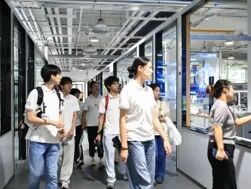
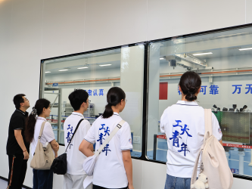
Focusing on the application of artificial intelligence in materials research and development, the team gained detailed insights into the development of materials databases, automated experimental processes,and the use of AI in materials synthesis screening. This gave the students a deeper understanding of how materials research is translated from fundamental studies into engineering applications.
Examining Seafood Distribution and the Marine Economy
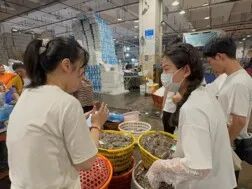
The team visited Zhoushan International Aquatic City to conduct field research on seafood distribution, the utilisation of marine fisheries resources and the development of marine-related industries. The students observed first-hand the sorting, sale and distribution of aquatic products, gaining a direct understanding of the close links between marine fisheries and market consumption, cold-chain logistics, food and catering services, and urban supply. The experience gave them a deeper appreciation of the important role of modern fisheries distribution systems in upgrading local industries and supporting the high-quality development of the marine economy.
Spanning several locations, the social practice programme took the team from research into marine pharmaceutical resources and seawater desalination technologies in Qingdao, to the development of green and smart ports in Rizhao, and then to innovation in new materials and advanced equipment in Ningbo and research into seafood distribution and marine-related industries in Zhoushan. Through these activities, the students gradually developed a systematic understanding of the links between marine resources, technological innovation, industrial application and green development. As youth in the new era, the students will continue to align their personal growth with the needs of national development, deepen their practical engagement in materials science and engineering, strengthen their commitment and develop their professional capabilities, contributing their youthful energy to the country’s development.
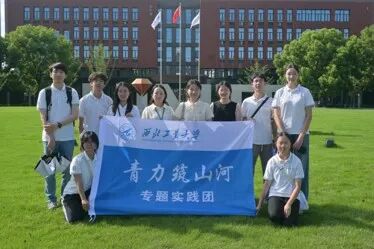
Xu Rui,2024 intake undergraduate, Queen Mary Engineering School:
“This was the first time I had seen seawater desalination, smart ports and the new materials industry at such close range. Through each visit, discussion and observation, the concepts of ‘building a strong maritime country’ and ‘green development’ became more tangible to me. The experience also gave me a clearer understanding of the responsibility of young students to contribute to national development strategies.”
Zhou Yuhan,2024 intake undergraduate, Queen Mary Engineering School:
“From Qingdao to Ningbo and Zhoushan, we saw how research platforms, production sites and industrial chains are interconnected. We also came to appreciate that the green transition depends on sustained, solid technological development. As an engineering student, I will seek to apply what I have learned to the needs of the country and, through my future studies and practical work, put my research to use where it is most needed.”
Source: Social Practice Guidance Centre, the Communist Youth League Committee of NPU
Text: Liu Yuhan, Han Weichen
Photos: Liu Yuhan, Fan Shiyong
Editors: Xu Rui, Zhu Zhixiang, Ren Han
Reviewers: Ge Qu, Lv Yan, Ni Xiaoqi, Zhang Xiaohong, Liu Chenyi, Cheng Yin, Liu Xing